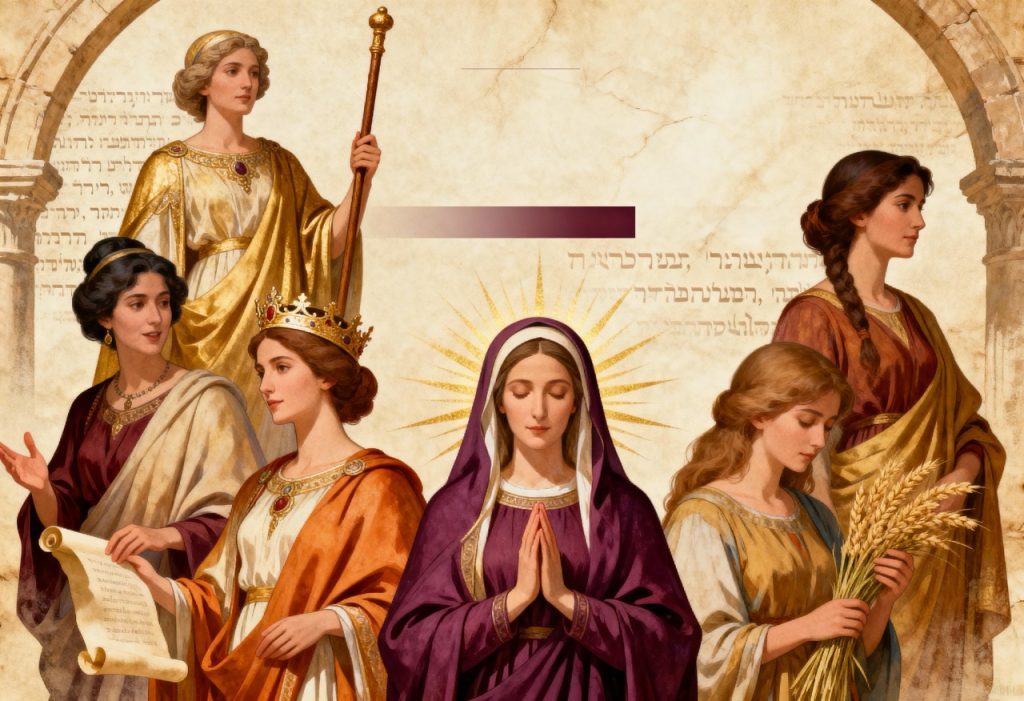
Understanding Biblical Passages About Women
It’s a question that deserves an honest answer: Is the Bible sexist? For many people, both skeptics and believers, certain biblical passages about women are deeply troubling at face value. Commands for wives to “submit,” restrictions on women teaching, laws that seem to treat women as property, and stories of polygamy all raise serious questions about whether Scripture demeans women or reinforces oppressive patriarchy.
These aren’t trivial concerns. If the Bible truly teaches the systematic subordination of women, that matters, both for how we understand Scripture and for how we practice faith today.
This article offers an honest examination of the most challenging biblical passages regarding women. Rather than dismissing concerns or offering superficial answers, we’ll examine each difficult text carefully: What does it actually say? What did it mean in its original context? How do we understand it faithfully today?
A few principles guide this exploration:
- Context matters immensely – Ancient texts must be read in their historical, cultural, and literary settings
- Progressive revelation – God’s truth unfolds across Scripture, reaching its fullness in Christ
- Jesus is the lens – Christ’s treatment of women and teaching about human dignity interprets everything else
- Trajectory counts – We must ask where Scripture is headed, not just what it accommodated in fallen cultures
- Framing is Key – We have to consider whether the passages are prescriptive or descriptive.
- Intellectual honesty – We won’t be dodging hard passages or pretending they’re easy
Let’s examine the texts that seem to cause the most concern.
Old Testament Passages About Women: Context and Meaning
1. Are Women Property in the Bible? (Exodus 20:17 Explained)
The Text:
“You shall not covet your neighbor’s house. You shall not covet your neighbor’s wife, or his male or female servant, his ox or donkey, or anything that belongs to your neighbor.”
The Apparent Difficulty:
The wife appears in a list alongside house, servants, livestock, and other possessions. This seems to classify women as property rather than persons.
Understanding the Passage:
Ancient Near Eastern (ANE) legal texts organized items in categories – real estate, people, livestock. This is standard legal formatting, not a statement about women’s essential nature or worth. This is literary structure, not ontological ranking.
In cultures surrounding the people of God (ancient Israel), men could seize or trade other men’s wives. This OT law prohibits even desiring another man’s wife, offering protection far beyond contemporary standards. This commandment actually does the opposite – protecting women.
Genesis 1:27 establishes that both male and female bear God’s image equally. This foundational truth interprets all application passages. You can’t understand Exodus 20:17 while ignoring Genesis 1:27. There is foundational equality everywhere.
Marriage is a covenant. Other Scriptures describe marriage as a sacred covenant (Malachi 2:14, Proverbs 2:17), not a commercial transaction. The wife is a covenant partner, not chattel.
The grammar reflects cultural legal categories, while the substance provides protection unprecedented in the ancient world.
2. Does the Bible Say to Buy Wives? Understanding Bride-Price (Exodus 22:16-17)
The Text:
“If a man seduces a virgin who is not pledged to be married and sleeps with her, he must pay the bride-price, and she shall be his wife. If her father absolutely refuses to give her to him, he must still pay the bride-price for virgins.”
The Aparent Difficulty:
This passage may read to some as if the father controls his daughter’s marriage and that a “bride-price” is paid, suggesting she’s purchased property.
Understanding the Passage:
Bride-price vs. purchase price. The mohar was not payment to buy a woman but compensation to her family for economic loss and a security deposit ensuring the husband’s commitment. It often went to the bride herself as financial security – the opposite of purchasing her.
Protection of women’s dignity. This law protects seduced women from abandonment. In ancient cultures, loss of virginity made women unmarriageable and often destitute. This law compels the man to marry her OR pay compensation, preventing her ruin. The historical and cultural context actually elevates a woman’s dignity far above those in surrounding cultures.
The father’s veto protects. The father can refuse the marriage, protecting his daughter from being forced to marry her seducer. This gives the woman’s family protective oversight rather than enabling exploitation.
Revolutionary for its time. Surrounding cultures had no such protections. A seduced woman might be stoned, enslaved, or abandoned. Israel’s law ensures her welfare and future.
This is case law for ancient Israel’s agrarian economy, not a divine blueprint for marriage in all cultures and times. It was not meant to be a prescription for all time, merely a best possible outcome given the cultural and historical setting.
3. Why Are Women Called Unclean in the Bible? (Leviticus 12 Explained)
The Text:
“The LORD said to Moses, ‘Say to the Israelites: A woman who becomes pregnant and gives birth to a son will be ceremonially unclean for seven days, just as she is unclean during her monthly period. On the eighth day the boy is to be circumcised. Then the woman must wait thirty-three days to be purified from her bleeding… If she gives birth to a daughter, for two weeks the woman will be unclean, as during her period. Then she must wait sixty-six days to be purified from her bleeding.'”
The Apparent Difficulty:
Women’s biological functions are treated as “unclean,” and the purification period is twice as long after giving birth to a daughter. This seems to suggest girls are “more unclean” or less valuable than boys.
Understanding the Passage:
Ritual vs. moral uncleanness. “Unclean” (tamé) is a ritual/ceremonial category, not a moral judgment. It relates to fitness for worship activities, not sinfulness. Natural processes – childbirth, menstruation, seminal emissions for men, touching corpses – all caused ritual uncleanness. This wasn’t a gender-specific condemnation.
Protection and rest. These laws mandated postpartum rest and recovery. In agrarian societies where women worked constantly, this enforced recuperation period was protective. The mother was exempt from normal duties and religious obligations.
The longer period for daughters. Several interpretations exist:
- Medical observation: Female infants may have caused more postpartum bleeding due to maternal hormones affecting the newborn
- Symbolic of the daughter’s future: The daughter would one day menstruate and give birth, so the doubling symbolically encompasses her lifecycle
- Emphasis on women’s special role: Some scholars see this as honoring the daughter’s future capacity to bear life
- Unknown reasoning: We may simply not understand the rationale from our historical distance
Men experienced ritual impurity, too. Leviticus 15:16-18 shows seminal emissions also caused ritual uncleanness. Both sexes experienced ritual impurity from reproductive functions.
Jesus transcended these categories. Christ regularly touched “unclean” persons (the hemorrhaging woman, corpses, lepers) without being defiled, showing these categories were provisional and preparatory.
Ritual purity systems structured worship life in ancient Israel, not human worth. Jesus’s ministry demonstrated that these were temporary categories pointing toward his purifying work.
4. Does the Bible Allow Polygamy? Understanding Multiple Wives in Scripture
The Passages:
Multiple biblical figures had more than one wife:
- Abraham (Genesis 16, 25:1-6) – Sarah, Hagar, Keturah, concubines
- Jacob (Genesis 29-30) – Leah, Rachel, Bilhah, Zilpah
- David (2 Samuel 3:2-5, 5:13) – multiple wives
- Solomon (1 Kings 11:1-3) – 700 wives, 300 concubines
The Apparent Difficulty:
It is claimed that God seemingly approved polygamy since these men were blessed and called righteous. This implies women are interchangeable and marriage isn’t the exclusive covenant Christians claim it to be.
Understanding the Passages:
The Bible records what happened, not what should happen. These are historical narratives, not divine endorsements. Just like any other history, these are descriptive, not prescriptive.
Negative consequences of polygamy are consistently shown in the Bible, not swept under the rug. This fact is actually a vote of confidence in the biblical text rather than an actual difficulty. To go even further, every polygamous relationship in Scripture is shown to produce strife and dysfunction:
- Sarah and Hagar: Jealousy and family conflict (Genesis 16, 21)
- Leah and Rachel: Bitter rivalry, using children as weapons in their competition (Genesis 29-30)
- David’s household: Rape, murder, and rebellion among children from different wives (2 Samuel 13-18)
- Solomon: His wives “turned his heart after other gods” (1 Kings 11:3-4), leading to the kingdom’s division
The Genesis 2 standard. God’s original design shows monogamy: “A man leaves his father and mother and is united to his wife [singular], and they become one flesh” (Genesis 2:24). Jesus reaffirms this as God’s intent (Matthew 19:4-6).
Progressive toleration, not approval. God permitted polygamy in a fallen world, just as He permitted divorce. Jesus explained: “Moses permitted you to divorce your wives because your hearts were hard. But it was not this way from the beginning” (Matthew 19:8). Permission does not equal approval.
Prophetic imagery. God’s relationship with His people is consistently portrayed as an exclusive, monogamous marriage (Hosea, Ephesians 5:25-32), never polygamy.
The New Testament explicitly mandates monogamy. Church leaders must be “husband of one wife” (1 Timothy 3:2, 12; Titus 1:6), establishing monogamy as the Christian standard.
Biblical narrative demonstrates polygamy’s dysfunction, establishes monogamy as the creational norm, and progressively restores that original design.
5. Does the Bible Allow Forced Marriage? War Captives in Deuteronomy 21
The Text:
“When you go to war against your enemies and the LORD your God delivers them into your hands and you take captives, if you notice among the captives a beautiful woman and are attracted to her, you may take her as your wife. Bring her into your home and have her shave her head, trim her nails and put aside the clothing she was wearing when captured. After she has lived in your house and mourned her father and mother for a full month, then you may go to her and be her husband and she shall be your wife. If you are not pleased with her, let her go wherever she wishes. You must not sell her or treat her as a slave, since you have dishonored her.”
The Apparent Difficulty:
This appears to allow the forced marriage of captive women. The woman has no choice and seems reduced to sexual slavery.
Understanding the Passage:
Radical protection for the ancient context. In the Ancient Near East, conquered women were routinely raped, enslaved, or killed. This law provides unprecedented protections:
- Cannot be treated as property: “You have dishonored her” acknowledges her personhood and dignity and puts the blame on the man.
- Formal marriage required: She must become a legal wife with full marital rights, not a concubine or slave.
- Cannot be sold: If divorced, she goes free; cannot be enslaved or sold (remarkable for war captives).
- Waiting period: One month prevents immediate gratification and allows emotional processing.
These requirements likely discouraged the practice unless they were actually legitimate instances of mutual agreement on a covenant. The month-long wait, mourning rituals, and permanent obligations made this far less attractive than surrounding practices, effectively limiting its occurrence.
Trajectory toward consent. While not our modern ideal, this represents significant movement toward women’s personhood in marriage. The New Testament completes this trajectory: “Husbands, love your wives, just as Christ loved the church and gave himself up for her” (Ephesians 5:25). Coercion is incompatible with Christlike love. The New Testament commands husband to love their wives sacrificially, even unto death.
Mourning rituals preserve dignity. Shaving head, trimming nails, and changing clothes were mourning customs. Women are given dignity to grieve their former life and acknowledging their profound losses.
Covenantal context. This is case law for Israel’s military engagements in Canaan, not a universal moral prescription for all warfare in all times.
This law restrains and regulates an evil practice in a wartime context, moving toward protection and dignity, ultimately pointing toward fuller recognition of women’s agency.
6. Why Could Only Men Divorce in the Bible? (Deuteronomy 24 Explained)
The Text:
“If a man marries a woman who becomes displeasing to him because he finds something indecent about her, and he writes her a certificate of divorce, gives it to her and sends her from his house, and if after she leaves his house she becomes the wife of another man, and her second husband dislikes her and writes her a certificate of divorce… or if he dies, then her first husband, who divorced her, is not allowed to marry her again after she has been defiled.”
The Apparent Difficulty:
There are several issues to address here. First, this appears as though only men can initiate divorce. “Something indecent” is vague; a man could divorce for trivial reasons, and women have no parallel right.
Understanding the Passage:
Regulation, not endorsement. This passage doesn’t establish divorce; it regulates an existing practice, which was not the original pattern from God. The main point is the prohibition of remarrying a former wife who has remarried someone else, not the endorsement of easy divorce. This moreso creates a more stringent guidelines to avoid cavalier treatment of divorce.
Immense Protection for women. Requiring a written certificate protected women significantly:
- Legal documentation: Proved she was legitimately divorced, not abandoned or adulterous
- Freedom to remarry: She could legally remarry without being considered still married
- Economic protection: She could claim the marriage settlement owed to her
- Prevented false accusations: Protected her from the ex-husband later claiming she was still married
Constraint on male power. In surrounding cultures, men could divorce wives orally, impulsively, or simply abandon them. Requiring written documentation before witnesses created a process that discouraged rash action.
Jesus tightens the standard. When asked about this passage, Jesus responded:
- “Moses permitted you to divorce your wives because your hearts were hard. But it was not this way from the beginning” (Matthew 19:8)
- He restricts legitimate divorce to sexual immorality (Matthew 19:9)
- He elevates the Genesis 2 standard: lifelong covenant, “what God has joined together, let no one separate” (Matthew 19:6)
Paul affirms mutuality. In 1 Corinthians 7:10-16, Paul gives both wives and husbands instructions about separation, and says “the wife must not separate from her husband” (v. 10), showing women could also technicallt initiate separation.
Progressive revelation. This Old Testament regulation was an accommodation to fallen human hard-heartedness, ultimately superseded by Christ’s restoration of God’s original, more egalitarian design.
This law protected women in a culture where they were vulnerable, while Jesus later restored marriage to God’s creational intent, where both partners are equally bound by covenantal faithfulness.
7. Could Women Inherit Property in the Bible? (Numbers 27 Explained)
The Text:
“The daughters of Zelophehad… came forward. They stood before Moses, Eleazar the priest, the leaders and the whole assembly at the entrance to the tent of meeting and said, ‘Our father died in the wilderness… and had no sons. Why should our father’s name disappear from his clan because he had no son? Give us property among our father’s relatives.’ So Moses brought their case before the LORD, and the LORD said to him, ‘What Zelophehad’s daughters are saying is right. You must certainly give them property as an inheritance among their father’s relatives and give their father’s inheritance to them…'”
The Apparent Difficulty:
Women inherit only when there are no male heirs, implying they’re secondary and less valuable. This apparently reinforces patriarchal property structures.
Understanding the Passage:
Not an Exclusive Exception. Biblically speaking, the fact that women had the right to their father’s inheritance does not necessarily imply that it could only happen when there were no sons left. It simply tells us that women also had the right to inheritance. This was the divine command. Culturally, however, things may have been slightly different. Even then, it was revolutionarily permissive for women in light of the ANE cultures.
Revolutionary allowance. In the ANE, women typically had NO inheritance rights at all. Property passed exclusively through male lines. This passage grants women inheritance rights – unprecedented in that culture.
Protection of vulnerable women. Without inheritance rights, women without male protectors faced destitution. This law ensured economic security for daughters.
The case establishes precedent. The daughters of Zelophehad approached Moses, who inquired of God, and God ruled in their favor. This demonstrates:
- Women could bring legal cases
- God listened to women’s concerns
- The law could be modified in response to women’s advocacy
- Justice for women was a divine priority
Economic realities of ancient agrarian society. Land was the primary source of wealth and remained within tribes to maintain territorial integrity. Daughters who inherited typically married within the clan (Numbers 36) to consolidate the land. This explains the structure without prescribing it as a universal rule.
Women managed property. The “excellent wife” of Proverbs 31 manages property, buys fields, plants vineyards, and engages in business (Proverbs 31:16, 18, 24), showing women could own and control property.
The New Testament removes all economic distinctions. Galatians 3:28 declares “neither male nor female” in Christ. The early church supported widows communally (Acts 6, 1 Timothy 5), moving beyond the security of inheritance. The ethic becomes even more significant.
Modern application. These laws were specific to ancient Israel’s socio-economic system. They show God’s concern for women’s welfare within that system, progressively revealing full equality.
Within a patriarchal economy, this law gave women unprecedented rights and protection, moving toward the New Testament vision of equal standing before God and in community.
New Testament Passages About Women and Submission
8. What Does “Wives Submit to Husbands” Really Mean? (Ephesians 5:22-24)
The Text:
“Wives, submit yourselves to your own husbands as you do to the Lord. For the husband is the head of the wife as Christ is the head of the church, his body, of which he is the Savior. Now as the church submits to Christ, so also wives should submit to their husbands in everything.”
The Apparent Difficulty:
This commands female subordination. “Submit in everything” sounds like absolute obedience, reinforcing patriarchal hierarchy.
Understanding the Passage:
Mutual submission is the context. As in all passages, easy and difficult, Verse 21 (immediately preceding) says: “Submit to one another out of reverence for Christ.” The specific instructions that follow are applications of this mutual submission principle.
The radical command to husbands. Verses 25-33 command husbands to “love your wives, just as Christ loved the church and gave himself up for her.” This is actually the more demanding instruction:
- Christ’s love was self-sacrificing to the point of death
- Husbands must nourish, cherish, and care for wives as their own bodies
- No hint of domination, exploitation, or self-interest
- In a patriarchal culture, this elevated wives enormously
“Head” doesn’t necessarily mean “boss.” The Greek word kephalē can mean “source” or “origin” (as in headwaters of a river). Many scholars argue Paul uses “head” to mean “source of life” (as Christ is the source of the church), not “authority over.” Even if “head” implies leadership, it’s defined by Christ’s servant-leadership (Philippians 2:5-8), not domination.
“Submit” is voluntary. The Greek uses the middle voice: “submit yourselves” (voluntary action), not “be subjugated” (passive, forced). The same word describes Christ submitting to the Father (1 Corinthians 15:28) – submission doesn’t imply inferiority. It’s also used of all Christians submitting to one another (Ephesians 5:21), to governing authorities (Romans 13:1), and to church leaders (1 Corinthians 16:16).
Revolutionary for the time. In Roman culture, the paterfamilias had absolute power over wives, could divorce at will, and owned all property. Paul addresses wives directly as moral agents who make choices. Commanding husbands to sacrificial love was countercultural, men weren’t typically instructed to consider wives’ needs.
Christological, not merely cultural. The marriage relationship images the Christ-church relationship. The emphasis is on unity, mutual love, and self-giving, not hierarchy or power.
Read in full context, this passage elevates wives and constrains husbands within a culturally bound structure, moving toward the Galatians 3:28 ideal of full equality in Christ.
9. Understanding “Wives Submit” in Colossians 3:18
The Text:
“Wives, submit yourselves to your husbands, as is fitting in the Lord.”
The Apparent Difficulty:
At first glance, this may seem like a straightforward command for female subordination. The brevity makes it appear more absolute, but again, the larger context is significant.
Understanding the Passage:
Parallel structure with Ephesians. This is part of a “household code” (3:18-4:1) addressing wives, husbands, children, fathers, slaves, and masters. Like Ephesians 5, it balances instructions.
“As is fitting in the Lord” qualifies submission. This isn’t an absolute submission, but a submission appropriate for Christians – “in the Lord.” This means within the bounds of Christian faithfulness. If a husband commands sin, “fitting in the Lord” means she should obey God rather than man (Acts 5:29).
Immediately followed by the husband’s duty. We have to read the broader context and not just an isolated verse. The following verse is this: “Husbands, love your wives and do not be harsh with them.” “Do not be harsh” (Greek: pikrainō – “don’t embitter” or “don’t irritate”) prohibits abusive behavior, sharp words, and tyranny. Love and gentleness are the husband’s requirements.
Balanced reciprocity. Each party has responsibilities. The wife’s is submission; the husband’s is self-giving love and gentleness. Neither has a license for unilateral behavior.
Cultural accommodation with gospel transformation. Paul works within existing social structures but transforms them from within through gospel principles. He doesn’t overthrow Roman household structures overnight but inserts Christian virtues that ultimately subvert rigid hierarchies.
This brief instruction assumes the fuller context developed in Ephesians 5 and must be read in light of mutual responsibilities and Christ-centered love.
10. Did Sarah Really Obey Abraham? Understanding 1 Peter 3:1-6
The Text:
“Wives, in the same way submit yourselves to your own husbands so that, if any of them do not believe the word, they may be won over without words by the behavior of their wives, when they see the purity and reverence of your lives. Your beauty should not come from outward adornment, such as elaborate hairstyles and the wearing of gold jewelry or fine clothes. Rather, it should be that of your inner self, the unfading beauty of a gentle and quiet spirit, which is of great worth in God’s sight. For this is the way the holy women of the past who put their hope in God used to adorn themselves. They submitted themselves to their own husbands, like Sarah, who obeyed Abraham and called him her lord. You are her daughters if you do what is right and do not give way to fear.”
The Apparent Difficulty:
This commands submission even to unbelieving husbands. Sarah “obeyed” Abraham and called him “lord” – sounds like absolute obedience and subordination. The emphasis on a “gentle and quiet spirit” sounds like silencing women.
Understanding the Passage:
Evangelistic context. The primary concern is winning unbelieving husbands to Christ. Peter addresses wives in religiously mixed marriages – a vulnerable and difficult situation.
“Without words” is strategic. In Roman culture, women converting to foreign religions was viewed as subversive and brought shame on husbands. Peter counsels wives to evangelize through godly behavior rather than confrontational preaching, which would likely harden their husbands’ hearts.
“Gentle and quiet” does not mean silent or passive.
- “Gentle” (praus): The same word describes Jesus (“I am gentle and lowly in heart” – Matthew 11:29) and is a fruit of the Spirit (Galatians 5:23). It means strength under control, not weakness.
- “Quiet” (hēsychios): Means peaceable, tranquil, not contentious – not silent. The same word describes living quiet lives (1 Thessalonians 4:11) and keeping a peaceful city (1 Timothy 2:2). It’s about peaceful demeanor, not voicelessness.
- This isn’t about personality type but about inner beauty characterized by faith and peace.
Sarah’s “obedience” in context. Peter references Genesis 18:12, where Sarah, overhearing the promise of a son, laughs and refers to Abraham as “my lord” (a standard respectful term for husbands in Hebrew, like “my husband” today). But the full biblical portrait shows Sarah was no doormat:
- She initiated Hagar’s involvement (Genesis 16:2)
- She demanded Hagar and Ishmael’s expulsion (Genesis 21:10)
- God told Abraham, “Listen to whatever Sarah tells you” (Genesis 21:12)
Peter presents Sarah as a model of faithful, respectful behavior while trusting God – not absolute obedience to a husband.
“Do what is right and do not give way to fear.” This qualifies everything preceding it. Wives are to “do what is right” – not simply obey husbands in everything. “Do not give way to fear” suggests courage to stand for truth, even if it creates tension. This implies wives have moral agency to discern right from wrong.
Balance with instructions to husbands (verse 7): “Husbands, in the same way be considerate as you live with your wives, and treat them with respect as the weaker partner and as heirs with you of the gracious gift of life, so that nothing will hinder your prayers.”
- Husbands must treat wives with respect and consideration
- “Weaker partner” refers to physical strength or social vulnerability, not moral/spiritual/intellectual inferiority
- “Heirs with you” – complete equality before God
- Mistreating a wife hinders prayer; a man’s relationship with God depends on treating her rightly
Peter addresses a specific pastoral situation (evangelizing unbelieving husbands) with strategic counsel, while affirming women’s moral agency and equal standing before God.
11. Can Women Teach in Church? Understanding 1 Timothy 2:11-15
The Text:
“A woman should learn in quietness and full submission. I do not permit a woman to teach or to assume authority over a man; she must be quiet. For Adam was formed first, then Eve. And Adam was not the one deceived; it was the woman who was deceived and became a sinner. But women will be saved through childbearing – if they continue in faith, love and holiness with propriety.”
The Apparent Difficulty:
This appears to be a blanket prohibition on women teaching men or holding authority. It bases the prohibition on creation order and Eve’s deception. “Saved through childbearing” sounds bizarre and potentially demeaning. The passage appears to contradict Galatians 3:28 and the evidence of women teaching elsewhere in the New Testament, so we must examine the context.
Admittedly, this is likely the most challenging passage, with multiple interpretations, but Paul contradicting himself in separate letters is highly unlikely.
Egalitarian Interpretation:
- Addressing a local/situational problem. 1 Timothy addresses specific problems in Ephesus (false teachers, immature believers). Ephesus was the center of Artemis worship, where female priestesses dominated; Christian women may have brought syncretistic practices. Women in Ephesus may have been prominent in spreading false teachings due to a lack of training. Paul’s prohibition may be temporary/local to address this specific situation.
- “Authentein” is an unusual word. “Assume authority” translates authentein, used only here in the New Testament. The most common New Testament word for authority is exousia, which Paul doesn’t use. Authentein can mean “dominate,” “usurp authority,” or even “exercise violent control.” Paul may be prohibiting domineering or seizing unauthorized authority, not necessarily all teaching or leadership.
- “Teach” may refer to false teaching. The context is false teaching (1:3-7, 4:1-3, 6:3-5). Paul may be saying: “I don’t permit a woman to teach false doctrine or domineer.” This protects the church from error while allowing women to teach the truth.
- The Adam/Eve reference is corrective, not prescriptive. False teachers in Ephesus may have been promoting Eve’s priority or spiritual superiority (common in Gnostic myths). Paul corrects this: Adam was formed first (a chronological fact, not establishing hierarchy). “Eve was deceived” doesn’t mean all women are more deceivable, but addresses a specific situation where women were being deceived by false teaching. The solution: women need to learn! “Let a woman learn” (v. 11) was radical; most cultures didn’t educate women. Once properly taught, women can teach (as Priscilla did with Apollos – Acts 18:26).
- “Saved through childbearing” cannot mean salvation by works (contradicts all New Testament theology). The likely meanings are:
- “Will be kept safe through childbirth” (physical preservation)
- “Will be saved through the childbearing” (definite article in Greek), referring to Christ’s birth (salvation came through Mary bearing Jesus)
- “Will be saved [and demonstrate salvation] through [faithful engagement in life, including] childbearing [among other things]”
- We find many women teachers elsewhere in Scripture:
- Priscilla taught Apollos (Acts 18:26)
- Philip’s daughters prophesied (Acts 21:9)
- Phoebe was a deacon/minister (Romans 16:1-2)
- Junia was “outstanding among the apostles” (Romans 16:7)
- Paul tells the Colossian church to let “the word of Christ dwell in you richly, teaching and admonishing one another” (Colossians 3:16) – no gender restriction
- Women hosted house churches (Lydia, Nympha, Apphia), which implied teaching roles
- Older women are to teach younger women (Titus 2:3-4)
Complementarian Interpretation:
- Creation order establishes a permanent pattern. Adam being formed first indicates functional order, not just chronology. Eve was created as Adam’s mate, indicating differentiated roles. This order predates the Fall, so it’s part of God’s design, not a result of sin.
- The teaching restriction applies to the church teaching office. The prohibition concerns authoritative teaching in gathered worship. Women may teach children, other women, and in informal settings. The restriction applies to the elder/overseer role, which is described as male (1 Timothy 3:2 “husband of one wife”).
- Headship in marriage reflects in the church. As husbands lead families, male elders lead churches. This doesn’t mean women are inferior, but that God designed complementary roles.
- “Saved through childbearing” means women fulfill their calling by embracing (among other things) their nurturing roles. Not that childbearing itself saves, but that women find their purpose through faithfulness in all areas, including family.
Whatever interpretation you hold:
- This passage is debated by Christians who take Scripture seriously
- It’s written to a specific church facing specific problems
- Even the most restrictive interpretation doesn’t silence women entirely – they can learn, pray, prophesy, teach children/women
- The New Testament affirms women in many ministry roles
- Jesus elevated women, taught them as disciples, and appeared first to women after the resurrection
- The trajectory is toward “neither male nor female” in Christ (Galatians 3:28)
This passage has been debated for 2,000 years because it sits in tension with other New Testament teachings about women. That tension itself shows it’s not a clear prescription of comprehensive female subordination.
12. Should Women Wear Head Coverings? (1 Corinthians 11 Explained)
The Text (selected verses):
“Now I want you to realize that the head of every man is Christ, and the head of the woman is man, and the head of Christ is God… Every man who prays or prophesies with his head covered dishonors his head. But every woman who prays or prophesies with her head uncovered dishonors her head… For this reason, and because of the angels, the woman ought to have authority over her own head… In the Lord, however, woman is not independent of man, nor is man independent of woman. For as woman came from man, so also man is born of woman. But everything comes from God.”
The Apparent Difficulty:
“Head of woman is man” sounds hierarchical. Women must cover their heads, while men uncover theirs – an apparently different standard. The reasoning about glory, angels, and creation order is complex. This seems to restrict women.
Understanding the Passage:
Women were praying and prophesying. Paul assumes women will pray and prophesy in church. This alone is significant. Prophecy was authoritative speaking under inspiration (1 Corinthians 14:3-4). This passage actually affirms women’s public ministry. The issue is how they do it (head covering), not whether they may.
“Head” again. As with Ephesians 5, kephalē could mean “source” rather than “authority.” “Head of Christ is God” doesn’t mean Christ is inferior (orthodox Trinitarianism affirms equality of persons). Similarly, “head of woman is man” may refer to a woman coming from a man (Genesis 2), not rank.
Cultural practice of head coverings. In Corinth, head coverings signaled a woman’s marital status and respectability. Uncovered heads were associated with prostitutes or prophetesses of pagan religions. It’s very likely that Paul may be saying: maintain cultural respectability so the gospel isn’t hindered. Or: married women should signal their marital status to avoid sexual temptation in mixed gatherings.
“Because of the angels.” This is one of the most puzzling phrases in the New Testament. Possibilities include: angels observe worship (Ephesians 3:10); angels were present at creation (Job 38:7); or the need for order in worship. Regardless, Paul isn’t giving timeless theology of angels and head coverings.
“Authority over her own head” (v. 10). Greek: exousian echein epi tēs kephalēs. This literally says “the woman ought to have authority over her head.” Paul says the woman has authority – she controls her own head covering. This empowers women, not restricts them.
Mutual interdependence affirmed (vv. 11-12). “In the Lord, woman is not independent of man, nor is man independent of woman.” “Woman came from man” (creation), “man is born of woman” (every birth). “Everything comes from God.” This balances any hierarchical reading with mutual dependence, both are from God.
Paul seems uncertain (vv. 13-16). “Judge for yourselves: Is it proper…?” “If anyone wants to be contentious about this, we have no other practice.” Paul appeals to propriety and custom, not divine command. This suggests cultural application of honor principles, not universal law.
Not a universal command. Early church art shows women with and without head coverings. Even churches that take Scripture seriously don’t uniformly require head coverings today. This suggests the church recognized the cultural/local nature of the instruction.
This passage affirms women’s full participation in worship, including prophesying. The head covering instruction seems tied to cultural honor codes in Corinth. Even if some hierarchy is implied, Paul immediately balances it with mutual interdependence and women’s authority over their own heads.
13. Should Women Be Silent in Church? (1 Corinthians 14:34-35)
The Text:
“Women should remain silent in the churches. They are not allowed to speak, but must be in submission, as the law says. If they want to inquire about something, they should ask their own husbands at home; for it is disgraceful for a woman to speak in the church.”
The Apparent Difficulty:
This seems to absolutely prohibit women from speaking in church. The language is very restrictive – “not allowed to speak,” “disgraceful.”
Understanding the Passage:
Immediate contradiction with chapter 11. Three chapters earlier, Paul regulates how women pray and prophesy in church. If women must be absolutely silent, chapter 11 makes no sense. Therefore, “silence” must mean something specific, not absolute voicelessness. It’s inconceivable for Paul to contradict himself within a span of a few verses, so something else is going on.
Context is disruption and disorder. 1 Corinthians 14 addresses chaotic worship: people speaking in tongues without interpretation, everyone talking at once, and prophecies not being evaluated.
- Verse 33: “God is not a God of disorder but of peace”
- Verse 40: “Everything should be done in a fitting and orderly way”
- Paul tells tongue-speakers to be silent if there’s no interpreter (v. 28)
- Paul tells prophets to be silent and let others speak (v. 30)
- “Silence” refers to not disrupting worship, not permanent voicelessness
“Ask husbands at home.” In Corinthian worship, teaching was dialogical – people asked questions during instruction. Women (often less educated) were apparently asking disruptive questions. Paul says: save your questions for home rather than interrupting the service. This addresses specific problematic behavior, not all speaking.
“As the law says.” No Old Testament law commands women’s silence in worship. Women sang (Exodus 15), prophesied (Judges 4-5, 2 Kings 22:14), and taught (Proverbs 31:26). Paul may refer to cultural decorum, not Mosaic law.
Textual issue. In some manuscripts, verses 34-35 appear after verse 40 rather than in their current location. This textual variation suggests even ancient scribes recognized these verses created tension and tried to place them more suitably. However, the verses appear in all early manuscripts, just in different locations.
Women “in submission.” To whom? Husbands? Church leaders? God? Context suggests submission to church order and decorum, not subordination to males generally. The same word (hypotassō) is used of all Christians submitting to proper church order.
Best interpretation: Paul addresses disruptive behavior (likely wives asking distracting questions during teaching), not all female speech. Women may pray, prophesy, and participate, but not in ways that create disorder.
This cannot mean absolute silence, given chapter 11. It addresses a specific disruption in Corinthian worship, consistent with Paul’s theme of orderliness throughout chapter 14.
Conclusion: What the Bible Really Says About Women and Equality
After examining these challenging passages carefully, several patterns emerge:
1. Cultural Context Matters
Many restrictions addressed specific first-century situations and cultures, not timeless universal commands. Understanding ancient contexts enables us to avoid importing modern assumptions while also preventing us from treating culturally bound practices as eternal truths.
2. Protection Within Patriarchy
Old Testament laws often protected women from worse alternatives in their patriarchal cultures. Women gained unprecedented rights – inheritance, divorce protections, marriage security – that surrounding nations didn’t provide. These laws represented significant progress toward justice.
3. Progressive Revelation
Scripture moves from Old Testament accommodation to Jesus’ radical elevation of women, to the New Testament working within and transforming social structures, and ultimately to the vision of full equality in Christ. God meets people where they are and moves them toward His ultimate design.
4. Jesus Is the Interpretive Key
Christ’s treatment of women was revolutionary:
- He taught women as disciples (Mary sitting at his feet – Luke 10:39)
- He appeared first to women after the resurrection (John 20:11-18)
- He defended women against unjust accusations (John 8:1-11)
- He relied on women’s financial support and witness (Luke 8:1-3)
- He included women in his parables as exemplars of faith
- He spoke to the Samaritan woman – crossing gender, ethnic, and religious barriers (John 4)
- He healed women whom others avoided (the hemorrhaging woman – Mark 5:25-34)
Jesus treated women as full persons, moral agents, capable disciples, and faithful witnesses. His example interprets everything else.
5. “Neither Male Nor Female”
Galatians 3:28 captures the New Testament vision: “There is neither Jew nor Gentile, neither slave nor free, nor is there male and female, for you are all one in Christ Jesus.” This doesn’t erase distinctions, but it erases hierarchy in terms of worth, dignity, and standing before God.
6. The Trajectory Is Clear
Even where specific applications differ across cultures and times, the biblical trajectory consistently moves toward:
- Greater recognition of women’s dignity
- Increased protection of women’s rights
- Expanded roles for women in God’s purposes
- Affirmation of women’s full personhood
This trajectory reaches its fulfillment in Christ, who elevates women to full participation in the Kingdom of God.
The Bible is Not Sexist
The Bible contains passages that are challenging when read through modern lenses, especially out of cultural and biblical context. These passages reflect cultures that were patriarchal and structured in ways that differ significantly from our own.
However, the Bible contains within itself the seeds and trajectory for affirming women’s full dignity, equality, and worth. While working within fallen cultural structures, Scripture progressively reveals God’s heart for justice, demonstrates His value for women, and points toward the complete restoration of His creational design, where male and female equally bear His image.
Christians who take the Bible seriously can, and do, debate the application of specific passages. But there’s broad agreement on foundational truths:
- Women and men equally bear God’s image (Genesis 1:27)
- Jesus Christ treated women with dignity and included them fully in His ministry
- The New Testament envisions a community where standing before God isn’t determined by gender (Galatians 3:28)
- Love, mutual submission, and servant leadership should characterize all Christian relationships
The biblical vision, properly understood through Christ, provides rich resources for affirming human dignity and working toward true equality. While Christians throughout history have sometimes fallen short of this vision, the vision itself is deeply rooted in Scripture, particularly in the person and teachings of Jesus Christ.
Understanding these difficult passages in their contexts reveals not a God who demeans women, but a God who works progressively through history to restore His original design: men and women together, both reflecting His image, both essential to His purposes, both invited into full relationship with Him.
For further study, consider exploring how women functioned in the early church (Acts, Paul’s letters), the women who figure prominently in Jesus’s genealogy (Matthew 1), and the crucial role of women in Israel’s history (Miriam, Deborah, Huldah, Esther). Biblical history is filled with women of faith, courage, and leadership, pointing us toward God’s ultimate vision for human flourishing.
Discover more from Cold and Lonely Truth
Subscribe to get the latest posts sent to your email.