


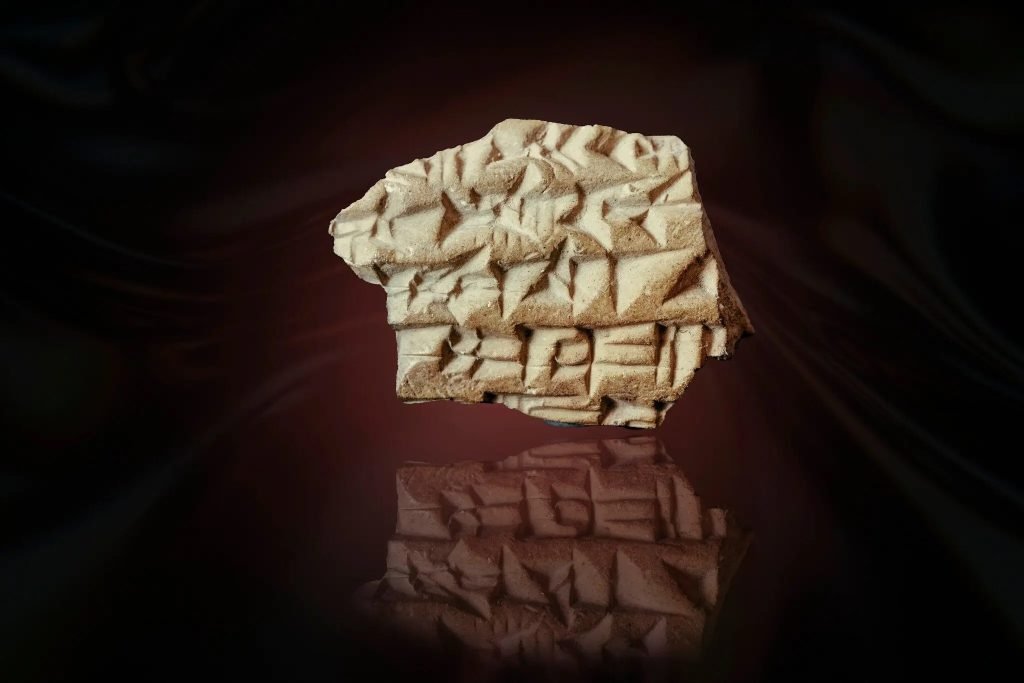
When a recent archaeological discovery in Jerusalem—an Assyrian administrative inscription corroborating the biblical account of Sennacherib’s invasion—hit social media, skeptics responded not with historical analysis but with comic book analogies. “Spider-Man mentions New York,” one skeptic argued, implying that real places in fiction mean nothing, proving anything. This absurd comparison reveals something troubling about modern radical skepticism: the reflexive rejecting biblical evidence has become so extreme that logical fallacies now pass for arguments. The archaeological evidence Bible scholars have uncovered should be evaluated by the same historical standards applied to any ancient text, yet biblical skepticism fallacies like the Spider-Man comparison demonstrate how predetermined conclusions override rational methodology. What happened next in that Facebook thread perfectly illustrates how far some will go to avoid acknowledging when archaeology aligns with Scripture.
I’ve been doing Christian apologetics long enough that I thought I’d seen every flavor of radical skepticism. The “Jesus never existed” crowd. The “all religions are equally valid” relativists. The “Bible was written centuries later” theorists. I’ve engaged with them all, and honestly, most skeptical arguments—while flawed—at least attempt logical coherence.
Then I encountered something new on Facebook that made me laugh out loud at my desk.
The Facebook Exchange That Broke My Brain
The New York Post ran a story about an Assyrian pottery inscription discovered in Jerusalem. The artifact, written in Akkadian and dating to the late 8th century BC, corroborates the biblical account of Assyrian-Judah interactions during King Hezekiah’s reign. It’s exactly the kind of archaeological finding that historians love: a contemporary administrative document from the imperial power itself, found in the exact location and time period described in multiple ancient sources.
I shared the article, excited about yet another piece of physical evidence illuminating biblical history.
Then came the comment from Skeptic #1:
“The SpiderMan comics talk about a place called New York which we now know is a real place. It’s almost as if people often incorporate real things into their fiction because our imaginations are kind of limited.”
I actually had to read it twice. Was this person seriously comparing an ancient Assyrian administrative tablet—a real-time government document written by the actual empire involved—to a 20th-century comic book about a fictional teenager with radioactive spider powers?
The sheer absurdity moved me to respond:
“In my years, I’ve seen some amazing radical skepticism. Yours ranks up there in the top 10. To compare an archeological find from a real place and time from one story as a corroboration on the same event in another in the REAL world, with a fictional world and fictional characters is wild. It’s as if people are so passionate in their rejection of truth that they create the most absurd alternatives.”
I thought that would be the end of it. The logical fallacy was so transparent that surely everyone could see it.
Enter Skeptic #2:
“The tablet refers to financial transaction. Nothing more. It is not proof of anything. The Iliad by Homer referenced real people and places too. It’s not proof that the Odyssey actually happened. People can’t pick and choose which pieces of archaeological data they want to cite, then spin it until it’s completely out of context to prove a point.”
Ah, the Iliad defense. Slightly more sophisticated than Spider-Man, but equally flawed. This required a more thorough response.
Why These Analogies Collapse Under Scrutiny
Let’s start with the obvious: these are category errors of spectacular proportions.
The Spider-Man Fallacy
Modern fiction set in real locations bears zero resemblance to ancient administrative documents. Stan Lee placing Spider-Man in New York is a conscious literary choice—he’s creating entertainment by borrowing a familiar setting for his fictional narrative. Everyone knows it’s fiction. It was written as fiction. It was marketed as fiction. No one disputes this.
The Assyrian inscription found in Jerusalem is:
- A contemporary government record from the 8th century BC
- Written by bureaucrats of the actual empire involved in the biblical narrative
- An administrative document dealing with tribute/taxation
- Found in situ—in the exact city, in the exact stratum, from the exact time period, multiple sources describe
These are not remotely comparable categories. One is creative literature. The other is what historians call “primary source material”—the gold standard of historical evidence.
If we discovered a 1st-century Roman tax record from Nazareth mentioning a carpenter named Joseph, would it be intellectually honest to dismiss it by saying, “Well, J.R.R. Tolkien mentioned real places like Oxford in his letters, so this doesn’t mean anything”? Of course not. That would be absurd.
Yet this is precisely the logical move Skeptic #1 attempted.
The Iliad Defense: More Sophisticated, Still Wrong
Skeptic #2’s comparison to Homer’s Iliad at least sounds more academic. After all, the Iliad does reference real places like Troy and may incorporate historical kernels of Bronze Age conflicts. So what’s wrong with the analogy?
Everything.
First, the temporal gap is critical. Homer composed the Iliad in the 8th century BC about events that supposedly occurred in the 12th century BC—roughly 400 years after the fact. That’s like someone today writing an epic poem about events from the 1620s, mixing legend, mythology, and oral tradition that has been embellished over four centuries. The historical kernels (if any) are buried under layers of mythological elaboration: gods interfering in battles, Achilles being invulnerable except for his heel, Helen’s face launching a thousand ships.
The Assyrian inscription is a contemporary document written during the events it describes. It’s the difference between a combat veteran’s diary and a medieval legend about King Arthur.
Second, genre matters. The Iliad is epic poetry—a genre that explicitly mixes history with mythology, human actions with divine intervention. Ancient audiences understood this. The inscription from Jerusalem is administrative prose—dry bureaucratic record-keeping about tribute and taxation. Bureaucrats don’t poeticize their tax receipts.
Third—and this is crucial—we have corroboration from the other side.
This is where the comparison completely disintegrates.
What the Evidence Actually Demonstrates
Here’s what makes this archaeological finding historically significant: three independent lines of evidence converge on the same historical situation.
The Biblical Account
The Hebrew Bible provides detailed narratives of Sennacherib’s invasion of Judah in 2 Kings 18-19, 2 Chronicles 32, and Isaiah 36-37. The account describes:
- Assyrian King Sennacherib invaded Judah in the 14th year of Hezekiah’s reign (701 BC)
- Hezekiah paid a substantial tribute to avoid Jerusalem’s destruction
- Assyrian forces besieged Jerusalem but ultimately withdrew without capturing the city
- Specific details about the tribute amount and diplomatic negotiations
The Assyrian Royal Records
Now here’s where it gets interesting. We don’t just have the biblical side of the story. We have Sennacherib’s own propaganda—the Taylor Prism and other Assyrian annals discovered in Nineveh. These inscriptions, written from the Assyrian perspective, mention:
- “Hezekiah the Judahite” by name—confirming both the king and the kingdom
- Specific tribute amounts: “30 talents of gold, 800 talents of silver, precious stones, antimony, large cuts of red stone, couches inlaid with ivory, elephant hides, ebony-wood, boxwood, all kinds of valuable treasures, his daughters, concubines, male and female musicians”
- The famous line: “As for Hezekiah the Judahite, who did not submit to my yoke, I laid siege to 46 of his strong cities… Himself I made a prisoner in Jerusalem, his royal residence, like a bird in a cage.”
Notice what’s missing from Sennacherib’s boast: he never claims to have conquered Jerusalem. He conquered 46 other cities. He besieged Jerusalem. He received tribute. But he conspicuously omits claiming victory over the capital itself.
This is remarkable. Ancient Near Eastern royal inscriptions were propaganda documents designed to glorify the king. They routinely exaggerated victories and omitted defeats. Yet Sennacherib’s own records align with the biblical account: Jerusalem was besieged but not captured, and Hezekiah paid tribute to end the siege.
The Archaeological Layer
Now add the newly discovered Assyrian inscription from Jerusalem itself. This is the first artifact showing Assyrian administrative presence within the city. It demonstrates that Assyrian bureaucrats were operating in Jerusalem, managing tribute and taxation—exactly what both the biblical text and Assyrian royal records describe.
This is called multi-source corroboration, and it’s the foundation of historical methodology. When you have:
- An account from one side (biblical narrative)
- Independent confirmation from the opposing side (Assyrian records)
- Physical archaeological evidence matches both accounts (the inscription)
…you’re no longer dealing with “maybe” or “possibly.” You’re dealing with ean stablished historical fact.
The Broader Pattern
This isn’t an isolated case. The Hezekiah-Sennacherib episode sits within a constellation of corroborating evidence:
Hezekiah’s Tunnel and the Siloam Inscription (701 BC): A 1,750-foot tunnel carved through solid rock to secure Jerusalem’s water supply before the Assyrian siege. The inscription describes its construction in ancient Hebrew, and 2 Kings 20:20 specifically mentions Hezekiah’s water works: “how he made the pool and the tunnel and brought water into the city.”
LMLK Seal Impressions: Over 2,000 jar handles stamped with “belonging to the king” and city names, found throughout Judah and dating to Hezekiah’s reign. These represent royal preparations for the Assyrian invasion—exactly what 2 Chronicles 32:3-5 describes.
The Lachish Reliefs: Massive stone carvings discovered in Sennacherib’s palace at Nineveh depicting the siege of Lachish, one of Judah’s fortified cities. Archaeological excavations at Tel Lachish revealed destruction layers from 701 BC matching the Assyrian depictions in stunning detail—arrowheads, siege ramps, burned walls.
Hezekiah’s Bullae: Clay seal impressions bearing the inscription “Belonging to Hezekiah [son of] Ahaz king of Judah,” providing direct epigraphic evidence of the king mentioned in both biblical and Assyrian texts.
This is the pattern biblical archaeology repeatedly demonstrates: where the biblical text can be tested against external evidence, it proves reliable in its historical details.
Why the Skeptical Response Reveals More Than It Intends
Here’s what fascinates me about the Spider-Man and Iliad analogies: they’re not arguments from evidence. They’re arguments are designed to dismiss evidence before it can be examined.
The underlying assumption is: “The Bible cannot be historically reliable, therefore any archaeological corroboration must be explained away.” This isn’t skepticism—it’s dogmatism wearing a skeptical mask.
Genuine historical methodology works differently. You gather evidence from multiple sources, evaluate their reliability, look for corroboration, and draw conclusions proportional to the evidence. When imperial records, biblical narratives, and archaeological finds all point toward the same historical scenario, the rational conclusion is that we’re looking at actual history.
But notice the rhetorical move both skeptics made: dismiss the significance before engaging the substance. It’s easier to invoke Spider-Man than to grapple with the fact that Assyrian bureaucrats left their administrative fingerprints in Jerusalem exactly when and where the biblical text says they did.
The Real Issue at Stake
I’ve come to realize that for many modern skeptics, no amount of evidence will suffice. The Pool of Bethesda’s five porticoes? Once dismissed as symbolic fiction, it was revealed by archaeology to be precisely that architectural configuration. The Pool of Siloam? Byzantine tradition until the 2004 discovery of the actual Second Temple period pool. Pontius Pilate? Questioned until the Pilate Stone turned up at Caesarea Maritima. Caiaphas? Doubted until his ossuary was discovered in 1990.
The pattern repeats: details dismissed as legendary are confirmed by independent evidence. Yet the goalposts keep moving.
Here’s my challenge to honest skeptics: Apply consistent historical standards.
When we find contemporary Roman records confirming events described by Tacitus, we don’t dismiss them with comic-book analogies. When we discover Persian administrative tablets corroborating details in Herodotus, we don’t invoke Spider-Man. When archaeological evidence illuminates Homer’s possible historical kernels (such as the discovery of Troy itself), we celebrate the convergence of literature and history.
Why should biblical texts receive different treatment when the evidence aligns?
The Assyrian inscription found in Jerusalem is historically significant precisely because it adds another layer of corroboration to an already well-attested event. It’s not “proof of everything,” and no serious historian claims it is. But it is evidence—real, physical, datable evidence—that the biblical narratives preserve accurate historical memory of real events involving real people in real places.
That’s not “picking and choosing” evidence. That’s how history is done.
And if acknowledging that makes me biased, then every historian who trusts Sennacherib’s annals, Josephus’s accounts, or Tacitus’s histories must be equally biased—because I’m applying exactly the same evidentiary standards.
Conclusion: When the Evidence Speaks
My Facebook exchange taught me something valuable: some people will reject evidence no matter how compelling, because they’ve already decided what conclusion they’ll accept. The Spider-Man analogy isn’t an argument; it’s a refusal to argue.
But for those genuinely interested in following evidence wherever it leads, the archaeological record keeps speaking. Imperial archives confirm biblical chronology. Physical artifacts verify topographical details. Independent sources corroborate events from multiple perspectives.
The cumulative case is precisely what we’d expect if the biblical texts—while written with theological purposes—are rooted in actual historical memory rather than pure legend.
No single potsherd proves the entire Bible. But when imperial records, biblical narratives, archaeological finds, and even geomagnetic dating of destruction layers all point in the same direction, dismissing them with comic-book comparisons doesn’t demonstrate intellectual rigor.
It reveals a reluctance to follow the evidence where it clearly leads.
And honestly? That tells me more about modern skepticism than any ancient pottery ever could.
Image Copyright Emil Aladjem/Israel Antiquities Authority
Discover more from Cold and Lonely Truth
Subscribe to get the latest posts sent to your email.



Thank you for such a well written repost to the bizarrely warped fringes of secularism, naturalism and atheism who under the cloak of rationalism are running science and education.
Thank you, Michael! I appreciate the comment; it’s very encouraging. I’m hoping that as people think critically, some of this fog will lift.